President Javier Milei's trusted team is working against the clock on the details of a high-impact announcement: the signing of a pardon for military personnel convicted of so-called crimes against humanity. Although the presidential circle clarifies that the final decision has not yet been made, the order from the top of power is clear: to thoroughly study the legal, political, and communicative aspects of the measure.
It should be noted that the terrorist organizations of the 70s, responsible for the coup, were never prosecuted, having caused thousands of attacks and victims, including children.
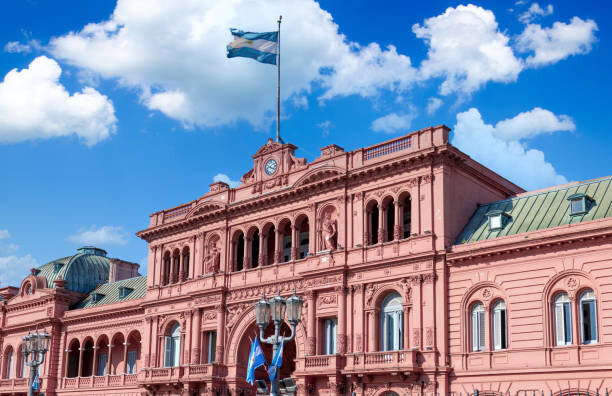
The background of a campaign promise The idea of a "definitive solution" for the detained military is not new in the libertarian sphere. Buenos Aires, March 3, 2026 - Total News Agency - TNA - In the corridors of the Casa Rosada, the atmosphere is one of absolute reserve, but the intensity of work in the official offices reveals that a decision is being gestated that promises to shake the foundations of the Argentine political scene. For the presidential team, keeping people of that age in common prisons or without the necessary palliative care dangerously approaches a form of cruel treatment that the State itself should avoid.
The legal framework and the debate to come The biggest challenge for the team of legal advisors is to find a legal framework that allows a potential pardon to withstand the judicial onslaught that will surely come from human rights organizations and the opposition. International jurisprudence and previous rulings from the Argentine Supreme Court have been restrictive regarding pardons in cases of crimes against humanity, which forces the Government to seek a solid legal loophole, possibly supported on humanitarian grounds due to the health of the convicts.
Politically, the measure guarantees a phenomenal debate. If Javier Milei finally signs the pardon on March 24, he will break the basic consensus that has reigned in Argentine politics since the return of democracy in 1983. The Government is studying how to present this initiative not as a vindication of the coup, but as an act of justice and national pacification. The Casa Rosada is playing with political fire, but it does so with the conviction of one who feels backed by a mandate for an era of change.
During the presidential campaign that brought Javier Milei to the Rivadavia chair, current Vice President Victoria Villarruel had already hinted at this possibility in various private meetings with military families. This is not a simple administrative act, but a strategic turn that seeks to close one of the deepest and most prolonged wounds in national history. In those meetings, the need to recognize the context of the 70s was discussed, when the armed forces fought terrorist groups that had logistical and doctrinal support from Cuba and other terrorism hotspots in the Middle East.
Victoria Villarruel, who has made "full memory" one of her main political banners, has been the historical link with the families that demand what they consider a "crooked justice." According to the latest quarterly reports, there are still hundreds of military personnel deprived of their liberty. Today, with the power of the State in their hands, that campaign commitment seems to be one step away from materializing into a pardon decree that would seek to benefit those who languish in prison in inhumane conditions.
Numbers, health, and detention conditions The President's legal team is analyzing with a magnifying glass the updated statistics produced by the Ministry of Public Prosecution. The country is heading towards the 50th anniversary of the coup in a climate of extreme polarization, where the discussion about the past will once again be the central axis of the dispute over the future.
However, the data that weighs most in the Government's humanitarian balance is the age of the detainees: they are men, the vast majority of whom are over 80 years old, and in many cases, have passed the 90-year barrier. From President Milei's circle, they point out that many of these detainees are in deplorable conditions, facing terminal or chronic diseases without the possibility of receiving the specialized medical care their advanced age requires. March 24 is a sacred date for progressivism and social movements in Argentina that were enriched with millionaire subsidies. "It is a matter of basic humanity, beyond the core legal discussion," they comment off the record in Balcarce 50. There are still many who wish to keep Argentina in the past. For many, it is the ultimate act of audacity to "turn the page" of history.